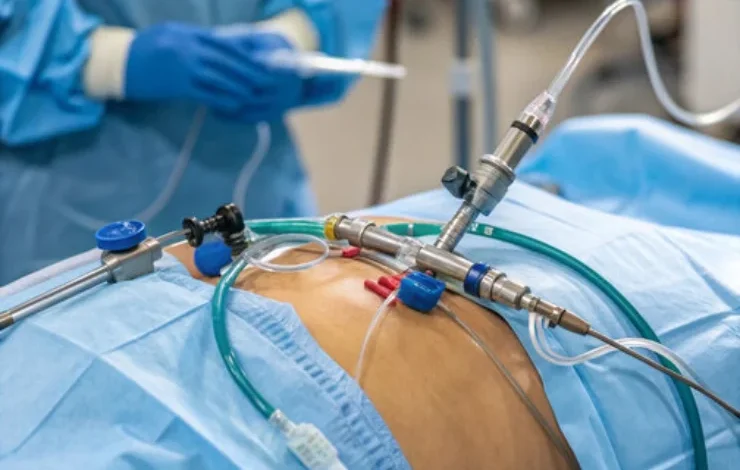
Introduction
Minimally Invasive Surgery (MIS) has transformed the field of modern medicine by offering safer alternatives to traditional open procedures. Instead of large incisions, surgeons operate through small cuts using specialized instruments, cameras, and advanced imaging technologies. This approach reduces trauma to the body while maintaining high precision.
MIS is widely used across specialties, including general surgery, orthopedics, gynecology, urology, and cardiology.
Key Techniques in Minimally Invasive Surgery
1. Laparoscopic Surgery
Also known as keyhole surgery, this technique involves inserting a thin tube with a camera (laparoscope) through small incisions.
Common uses include:
- Gallbladder removal (cholecystectomy)
- Appendectomy
- Hernia repair
Key features:
- High-definition video guidance
- Small incisions (usually 0.5–1.5 cm)
- Faster healing compared to open surgery
2. Robotic-Assisted Surgery
This advanced form of MIS uses robotic systems controlled by surgeons.
Advantages include:
- Enhanced precision and control
- 3D visualization of the surgical field
- Reduced hand tremors
It is commonly used in prostate, cardiac, and complex abdominal surgeries.
3. Endoscopic Surgery
Endoscopic procedures use a flexible tube with a camera inserted through natural body openings.
Examples:
- Gastrointestinal endoscopy
- Bronchoscopy
- Arthroscopy (joint surgery)
This technique often eliminates the need for external incisions entirely.
Benefits of Minimally Invasive Surgery
MIS offers several advantages over traditional open surgery:
Faster Recovery
- Patients typically recover in days instead of weeks
- Shorter hospital stays
Reduced Pain
- Smaller incisions mean less tissue damage
- Lower reliance on pain medication
Minimal Scarring
- Tiny incisions lead to better cosmetic outcomes
Lower Risk of Infection
- Reduced exposure of internal tissues decreases infection risk
Less Blood Loss
- Precision tools help minimize bleeding during procedures
Risks and Limitations
Despite its advantages, MIS is not without challenges.
Technical Complexity
- Requires highly trained surgeons
- Steep learning curve for advanced techniques
Limited Accessibility
- Not all hospitals have access to robotic or advanced MIS equipment
Potential Complications
- Injury to surrounding organs
- Bleeding or infection (though less common)
- Conversion to open surgery if complications arise
Not Suitable for All Cases
- Complex or advanced conditions may still require traditional open surgery
Who Is a Good Candidate?
Patients may be suitable for MIS depending on:
- Overall health condition
- Type and severity of the disease
- Previous surgical history
- Surgeon’s expertise
A thorough evaluation is always necessary before deciding the surgical approach.
Future of Minimally Invasive Surgery
The future of MIS is driven by innovation and technology:
- Artificial intelligence (AI) assisting in surgical planning
- Augmented reality (AR) for enhanced visualization
- Development of smaller, more precise instruments
- Expansion of remote and telesurgery capabilities
These advancements aim to make procedures even safer, faster, and more accessible.
Conclusion
Minimally Invasive Surgery represents a significant leap forward in patient care. With its reduced recovery time, lower risk profile, and improved outcomes, it continues to replace traditional surgical methods in many areas. However, careful patient selection and skilled surgical expertise remain essential to achieving the best results.
FAQs
1. Is minimally invasive surgery completely risk-free?
No, while it is safer than traditional surgery, it still carries risks such as infection, bleeding, or complications.
2. How long does recovery take after MIS?
Recovery usually ranges from a few days to a couple of weeks, depending on the procedure.
3. Is robotic surgery better than laparoscopic surgery?
Both have advantages; robotic surgery offers more precision, but laparoscopic surgery is more widely available.
4. Will I have scars after minimally invasive surgery?
Yes, but they are usually very small and less noticeable compared to open surgery scars.
5. Can all surgeries be done using minimally invasive techniques?
No, some complex or emergency cases still require traditional open surgery.
6. Is MIS more expensive than traditional surgery?
It can be slightly more expensive due to advanced equipment, but shorter hospital stays may offset costs.
7. How do I know if I am eligible for MIS?
A qualified surgeon will evaluate your condition, medical history, and overall health before recommending the best option.

